2027 Keynote Speakers
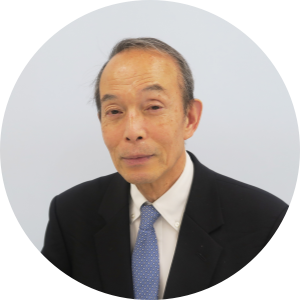
Prof. Fumihiro Maruyama
National Institute of Advanced Industrial Science and Technology (AIST), Japan
Speech Title: Human-Machine Teaming: Framework and Development
Abstract: Human-machine teaming is defined as integration of human interaction with machine intelligence capabilities in ISO/IEC 22989 (Artificial intelligence concepts and terminology). ISO/IEC 25589 (Framework for human-machine teaming) is being developed at ISO/IEC JTC 1/SC 42/WG 4. I will present the framework for human-machine teaming with its five basic relationship types between human(s) and machine(s), their combination and evolution. I will also touch upon its development into personal AI agents, which are special cases of human-machine teaming.
Biography: Dr. Maruyama is an invited senior researcher at Intelligent Platform Research Institute, National Institute of Advanced Industrial Science and Technology (AIST), Japan. He is also a special adviser on AI education at Chuo Computer & Communication College Group (CCG). He served as convenor of ISO/IEC JTC 1/SC 42/WG 4 (AI use cases and applications) until the end of 2024. Before joining AIST and CCG, he worked for Fujitsu Laboratories Ltd., Kawasaki, Japan, where he was engaged in research and development of CAD, AI, and CRM solutions and served for four years as managing director of Fujitsu Laboratories of Europe based in London, UK.
Dr. Maruyama received his B.S. degree in Mathematical Engineering and Dr. of Engineering degree in Information Engineering from the University of Tokyo. He was awarded the IPSJ (Information Processing Society of Japan) 20th Anniversary Best Paper Award and the Prof. Motooka Commemorative Award. He is a life member of IEEE, IPSJ, the Institute of Electronics, Information and Communication Engineers of Japan, the Society for Serviceology, and the Japanese Society for Artificial Intelligence, where he served as executive vice president and auditor for four years and received Distinguished Service Award.

Assoc. Prof. Frederic Andres
National Institute of Informatics, Japan
Speech Title: Ontological Paradoxes in Ethical AI: Rethinking Autonomy, Agency, and Accountability in Human-Machine Teaming
Abstract: As AI systems increasingly participate as teammates rather than tools, software engineering faces new frontiers in reconciling autonomy, agency, and accountability. In learning, education, and training (LET) contexts, human–machine teaming magnifies ontological paradoxes: machines exhibit forms of autonomy without moral agency, while humans retain agency yet delegate decision-making to algorithms. This tension challenges conventional notions of accountability and unsettles established ethical frameworks. This keynote explores how ethical AI assessment must evolve when responsibility is distributed across human and machine actors. It highlights paradoxes where autonomy and control co-exist, where accountability is simultaneously diffuse and inescapable, and where agency is reconfigured through interaction rather than individual intention. Drawing on insights from ethical theory, ontological inquiry, and software engineering practice, the talk proposes new models for framing responsibility in human–machine ecosystems. For software engineers, these paradoxes are not abstract puzzles but practical design challenges. By rethinking autonomy, agency, and accountability, we can advance toward ethical AI systems that support resilient, transparent, and trustworthy human–machine teaming in LET and beyond.
Biography: Frederic Andres (Senior Member, IEEE) received his Ph.D. in Information Systems from the University of Paris VI “Pierre et Marie Curie” in 1993 and his Dr. Habilitation in Informatics from the University of Nantes in 2000. Since 2000, he has been an Associate Professor with the Digital Content and Media Sciences Research Division at the National Institute of Informatics (NII), Tokyo, Japan. He has authored over 250 publications in international journals, books, and conferences. His research spans semantic technologies, collective intelligence, AI ethics, data science, and human-centered applications, with interests ranging from digital heritage and mulsemedia to intelligent food systems, affective computing, and pedagogy in web-based science education. His team won first prize in the IEEE Brain Data Bank Challenge at COMPSAC 2018, and he has been recognized as an IEEE CertifAIEd Lead Assessor (2023) and IEEE Region 10 Ethics Champion (2023). He has also been co-organizing the International Workshop on Data Engineering Meets Intelligent Food and Cooking Recipes (DECOR@ICDE) with IEEE ICDE since 2018.
More speakers will be announced soon.....